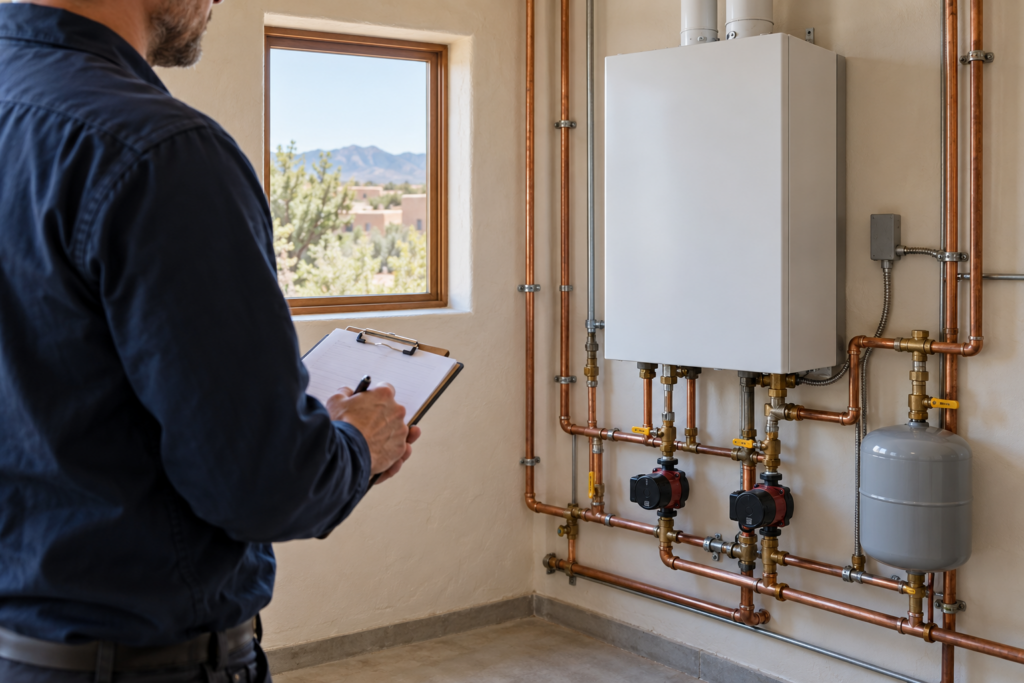
A boiler replacement estimate should describe the complete heating-system work, not just the new appliance. Look for the equipment selected, the reason for its capacity, connections to existing heating zones, venting and other installation changes, startup checks, and clear exclusions.
For a Santa Fe home with hydronic radiant heat, the boiler is only one part of the system. Replacing it does not automatically replace the floor tubing, correct every cold zone, or include every pump and control.
Cypress B. PHC offers boiler repair and replacement. Before approving a proposal, use these questions to understand what will be changed, what will remain, and how the finished system will be checked.
Begin With the Problem the Replacement Should Solve
Tell the contractor whether the issue is a boiler fault, uneven room temperatures, repeated loss of heat, or a planned upgrade. Include when it happens and which rooms or zones are affected.
A cold room can involve the heating distribution, controls, or building conditions as well as the boiler. Ask which findings support replacement and which symptoms need a separate repair.
If a repair remains an option, request an explanation of its scope and the limitations it would leave. A replacement decision is easier to assess when the diagnosis and alternatives are clear.
Identify the Boiler and Explain Its Capacity
The proposal should name the manufacturer, model, fuel type, and proposed heating capacity. “High efficiency boiler” alone does not identify the equipment you are buying.
Ask the installer to explain how the selection fits your home and existing system. Relevant questions include:
- How was the home’s heating requirement evaluated?
- Were insulation, windows, additions, or other building changes considered?
- Which existing heating zones and emitters will the unit serve?
- Does the boiler also serve household hot water?
- Which manufacturer requirements apply to this installation?
The old boiler’s label is useful background, but ask whether its capacity is still appropriate. Do not assume a larger unit is the best way to solve weak heat in one room.
Keep the proposed model and the sizing explanation with the estimate. If an equipment substitution becomes necessary, ask how its specifications and installation requirements compare before approving it.
Define the Boundary Between the Boiler and Radiant System
In a hydronic system, heated water circulates through distribution piping and heating emitters. Those can include floor loops, baseboards, or radiators, depending on the home.
Cypress B. PHC also provides radiant heating installation and repair. Ask which existing components have been evaluated and whether their condition supports reuse with the proposed boiler.
A boiler replacement can retain much of the distribution system. The estimate should say whether floor tubing, manifolds, pumps, zone valves, thermostats, and other controls are retained, repaired, or replaced.
Ask What the Connection Work Includes
Installation can require changes around the appliance even when the new boiler occupies the same room. The scope should identify the proposed connections rather than leaving them under an undefined installation allowance.
Have the contractor distinguish included work from condition-dependent work, such as:
- Heating supply and return connections.
- Circulators, valves, and control changes.
- Expansion and air-management components.
- Fuel and electrical connections appropriate to the selected unit.
- Venting and combustion-air arrangements.
- Condensate handling where the appliance requires it.
This is a scope checklist, not a requirement that every component must be replaced. The actual work depends on the selected equipment, existing condition, manufacturer instructions, and requirements for the property.
Confirm the Venting and Access Plan
Ask whether existing venting can be reused or whether the new appliance needs a different arrangement. The contractor should explain any proposed wall, roof, or other building penetrations.
Service clearance and a safe route for removing the old boiler also matter. Discuss doorways, storage, nearby finishes, and whether anything needs to be moved before the appointment.
If the plan involves new openings or changes to finishes, establish who seals and finishes them. A completed appliance installation does not necessarily include painting or all building repairs.
Clarify Household Hot Water and Heating Downtime
Some boilers provide space heat only; other arrangements also support household hot water. Ask which services your existing system supplies and how the proposed replacement will serve them.
Request the expected shutdown sequence and how the household will be told when heat and any affected hot-water service can resume. Do not assume both return at the same milestone.
For work during cold weather, discuss the home’s needs before scheduling. Ask the contractor about the plan for delays and protection of the affected system rather than improvising equipment or altering the boiler yourself.
Specify Startup and Completion Checks
Startup should be more than confirming that the boiler powers on. Ask what the installer will check for this exact appliance and connected heating system.
- Confirm the installed model and agreed connections.
- Complete the manufacturer’s applicable startup and safety checks.
- Check the connected controls and heating zones included in the scope.
- Review operating settings and any unresolved system limitations.
- Provide the agreed documents and explain routine operation.
Ask who coordinates any required permit or inspection and how that responsibility appears in the proposal. Local requirements must be verified for the specific work and property; a general article cannot settle them.
Compare Estimates With the Same Boundaries
Different proposals may retain different components or include different amounts of connection, venting, and control work. An equipment price alone can conceal those differences.
Compare the model, capacity explanation, retained components, included labor, access work, completion checks, disposal, and exclusions. Ask for unclear allowances to be described before choosing.
Put Changes and Retained Limitations in Writing
An existing component may prove unsuitable when the system is opened or tested. Agree on how findings will be explained and how additional work will be priced and authorized.
Also record what the replacement will not address. A retained leaking loop, faulty zone component, or other known defect needs its own plan rather than an assumption that a new boiler resolves it.
Questions About Boiler Replacement Estimates
Does replacing the boiler mean replacing the radiant floor?
Not automatically. A proposal may retain suitable existing floor loops and distribution components. Ask which parts were evaluated, which remain, and which are included in the work.
Should the new boiler match the old unit’s capacity?
That should be evaluated rather than assumed. Ask how the proposed capacity fits the home’s current heating requirement and the connected system.
Are pumps and thermostats always included?
No single inclusion rule covers every proposal. Ask whether each existing pump, zone valve, and thermostat is retained or changed, and why that choice fits the installation.
Will a new boiler fix every cold room?
It should not be promised without diagnosis. Uneven heat can involve distribution, controls, or the building as well as the boiler. Have the contractor identify the cause and the work intended to address it.
Can I compare quotes before a home assessment?
Preliminary information may help you plan, but an assessment of the equipment, connections, heating zones, and access is needed to define a meaningful project scope.
Review Your Santa Fe Boiler Replacement Options
A clear estimate connects the diagnosis to the equipment choice and the complete installation. Knowing what remains in service helps you judge the proposal and plan any separate work.
To discuss boiler repair or replacement for your Santa Fe home, call Cypress B. PHC at (505) 920-8369. Ask for an assessment of the boiler and the heating-system work your property actually needs.